Mission Possible



Mission Possible is a national one-hour event aimed at connecting missionally-minded young adults with field workers in Bible translation. We hear stories, experiences and challenges of Bible translation as well as provide space for questions and comments.
Mission Possible is held 4-6 times a year covering different topics, including:
 Languages of the World – Introduction to Wycliffe Bible Translators Australia
- The Why and How of Bible Translation
- Life Across the Ocean – Meet a Bible translation team
- Skills for the Job – Training for Bible translation
- Making Disciples – Scripture Engagement
- Other roles essential to the support of Bible translation
- Before and Now – Stories of transformation through the translated scriptures
- Myth Busting on Bible Translation
Enquiries: Click here
Recordings of previous Mission Possible events
By a river in Papua New Guinea,
29 Jan 2024
|
 |
Bible Translation Context in Cambodia,
20 Nov 2023
|
 |
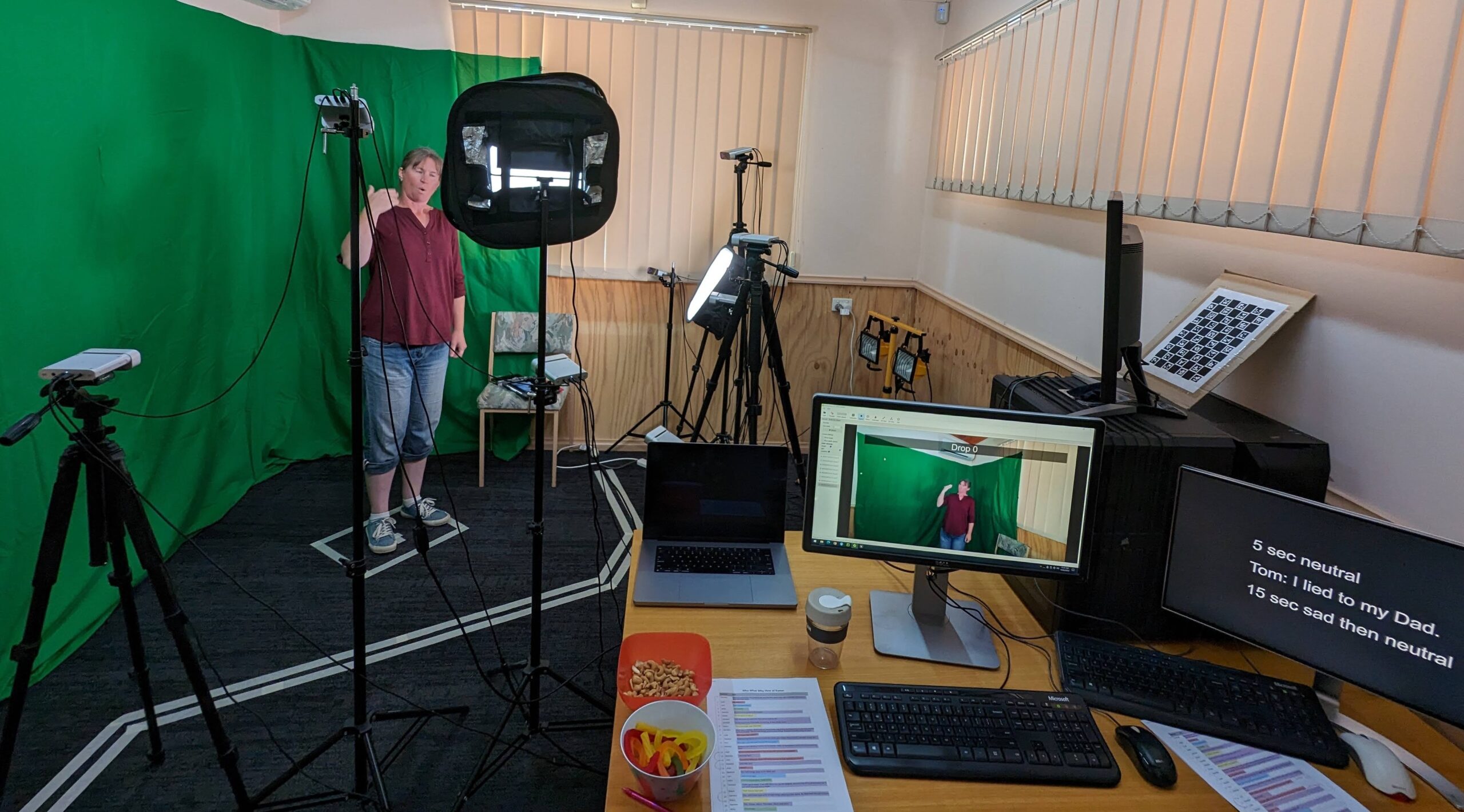
Sign language for Bible Translation,
3 Jul 2023
|
 |
Celebration of Bible Translation
The Celebration of Bible Translation dinners are held in various cities around Australia each year, to provide opportunities to hear reports on what God is doing in Bible Translation around the world, and to celebrate the spread of the Word of God to the millions who as yet have no access to it in their heart language. Details of each event are provided on separate pages.
The Matthew Drama
The Matthew Drama tells the story Matthew wrote in his Gospel through the voices and actions of a cast of 15 ordinary Christians.
Matthew was writing to a Jewish audience, and was keen to let them know upfront that Jesus was the promised Messiah, the son of David, so he begins with his genealogy. He was also eager to let his readers know that Immanuel (God with us), fulfilled a whole string of Old Testament prophesies. So The Matthew Drama has an actor playing the role of a prophet, who regularly interrupts the drama to shout, “Hear ye. Hear ye. This is what God said through his servant. . .”
The Matthew Drama also includes the birth narratives, with Joseph and Mary journeying to Bethlehem, and the Magi from the East searching for the new king, all the way through to his arrest, trial, crucifixion and resurrection. The drama concludes with Jesus’ words to his followers from chapter 28:19-20 to take the Good News to all nations. And they do!
The Matthew Drama is performed as theatre-in-the-round, with the stage in the centre, and the audience in circles around the action – until Jesus moves out into the circular cross-over aisles and the action engulfs the audience, with cast members on all sides interacting with the Master Teacher.
Audience Feedback:
Is The Matthew Drama suitable for all ages?
“Yes! My nine-year-old daughter and I attended and found it super-helpful to see Scripture brought to life in such a helpful way.”
“An absolute joy, uniquely presented, engaging and spiritually uplifting. The children were ‘spellbound’ with anticipation. Thank you.”
Is The Matthew Drama good quality theatre?
“We loved it. The performance quality was excellent, and the storyline was in-line with Scripture and wonderfully portrayed the Gospel.
“It was fantastic. The actors were so good and got the message across very powerfully.
“Really well done. Great to see Matthew’s Gospel brought to life. A high-quality performance.”
A Tool for Churches: Wycliffe Bible Translators are eager for the Good News to be heard and understood by people of every nation in their own language. The Matthew Drama is a tool to help Australian churches make the Gospel message clear – both for Christians and also for their neighbours who do not yet know the one named Jesus, “. . . for he will save people from their sins.”
Matthew Drama website
M.A.D. (Ministry, Adventure, Discovery)
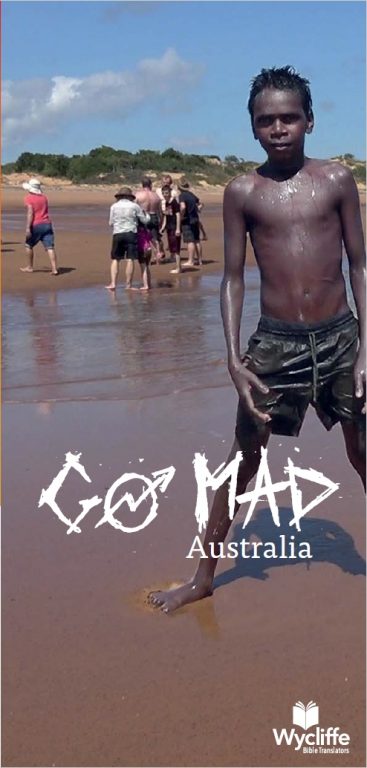 Ministry
- Live in a remote Aboriginal community
- Share life and faith with locals around the campfire
- Minister through testimonies, skits, songs and dramas
- Learn and perform songs in Aboriginal languages
Adventure
- Experience life in the outback first-hand
- Spend time with Aboriginal people in their traditional hunting grounds
Discovery
- See how God is at work in Bible translation, discipleship and other ministries
- Explore new opportunities to use your gifts
- Gain an understanding of issues facing Australia’s Indigenous people
- Take time out to reflect through team devotions and journalling
On the MAD trip, you will have the opportunity to visit two Aboriginal communities where Bible translation is taking place.
Contact us for more information
The John Drama
The John Drama is a dramatisation of the whole of John’s Gospel by a cast of 15 ordinary Christians, where the words Jesus speaks are taken directly from the New Living Translation of the Gospel of John. It has been performed in several churches in Brisbane and also at the Mt Tamborine Easter Convention in 2021.
The John Drama is done as ‘theatre in the round’, with the stage in the middle and the audience in concentric circles around the stage. The action moves from in front of you to an aisle behind you, and sometimes right beside you. Audience members cannot escape the events being portrayed in the Gospel drama!
The CEO of the Mt Tamborine Convention wrote, “It was excellent. ‘Theatre in the round’ offers a visual and aural experience that sometimes stage productions lack. I know that my children (13 years & 8 years) are still talking about it – they seemed to learn so much.” A member of the Mt Tamborine audience said, “The circular seating created a sense of being a part of the story as opposed to just watching a performance. The performance was an incredibly powerful and moving way to present the Gospel.”
A tool for churches: Wycliffe Australia sees The John Drama as a tool that churches can use for both disciple-making and evangelism. As the actors prepare for the presentation they internalise the whole of John’s Gospel. And audience members who are not believers hear the gospel through the story. One church leader said, “Before I saw The John Drama, I did not know that the gospel could be presented in such a clear, accurate and engaging way.”
A member of the Mt Tamborine audience wrote: “It was amazing!! Very, very impacting on young and old! A wonderful presentation of the gospel and a great tool for churches.”
The John Drama is something that any church with a vision for discipleship and outreach can sponsor.
John Drama website introduction video
The Journey
The Journey Program that Wycliffe offers is normally a day long simulation (5 to 6 hours) giving a taste of what a cross-cultural workers may experience. It is generally run for, and through, a local church involving a number of groups of participants passing through the various stations of the journey.
The Journey begins with participants in their Comfort Zone, being inspired by God’s Call, and having that call confirmed by their Local Church. They join the Great Commission Agency and start their Bible Training to grasp the importance of Scripture in their own life and in missions. Then they continue on to Language & Culture Training to learn how to begin to understand and appreciate a different ethnic group. They experience the challenges of applying for Passports and Visas while Raising Support before being Commissioned to go. Now they are ready to Travel to the country and begin their journey with Immigration to their host country. They experience the sights, sounds and tastes of a Foreign Culture and Language as they interact with this community. The Journey concludes with a Debrief from experienced missionaries, then the participants are challenged to do something for their Next Step to help grow their vision for world missions.
The Journey aims to give participants a different perspective of missions, providing:
- a deeper understanding of the ‘need’ for world missions (God’s heart for the lost)
- understanding their own calling to be involved in some way: (give, go, pray, advocate)
- better understanding of the role of the local church and mission agency in world missions (complimentary, not competition)
- recognising the need for good training and preparation, whether they go overseas or not
- a good encounter with people from a different language/culture than their own that will encourage them to build relationships with people of other cultures
- giving opportunities to continue to grow and experience in world missions (Next Step Opportunities).
If you would like more information about The Journey, or would like to discuss hosting The Journey, please contact The Journey national coordinator, Robert Love.
Encounter Culture
Most of us, when confronted with something that is ‘different’, have an emotional reaction to it, and inwardly think of it as ‘bad’ or ‘wrong’. This creates a hurdle, even if sub-consciously, to befriending people of different cultures when we are wanting to share the gospel with them.
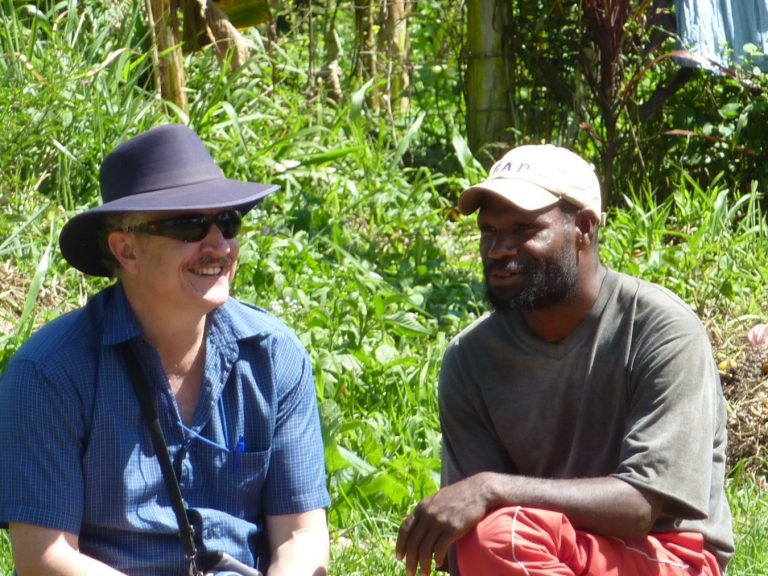
Encounter Culture
Wycliffe’s Encounter Culture course helps people develop a non-judgemental attitude to other cultures, a positive cultural curiosity, and an appreciation of all people. Through the five weekly sessions and four practical exercises you will:
- Progressively unpeel the ‘onion’ model of culture starting with the outward visible layer of behaviour,
- Learn how values influence and determine behaviour,
- Dig deeper to learn how beliefs drive values, and
- Consider what is real beyond the physical realm – what one’s worldview is.
Maximum benefit is gained from this course when participants pre-arrange to meet with a person from another culture to go through the weekly practical exercises with them.
Wycliffe offers this course to help churches in their role of ministering to people they enounter daily, in the increasingly diverse cultural landscape that Australia is becoming.
If you would like to host an Encounter Culture course in your church or ministry group, we can help! Contact the Encounter Culture Coordinator, Gary Peterson, for more information.
Special Events
Member Orientation
Partnership Development course
Attending a Partnership Development Workshop equips participants with knowledge, skills and resources to build a team of financial and prayer partners. Topics include communication, organisation, biblical basis and speaking skills, all with the goal of enabling you to realise God’s call into mission.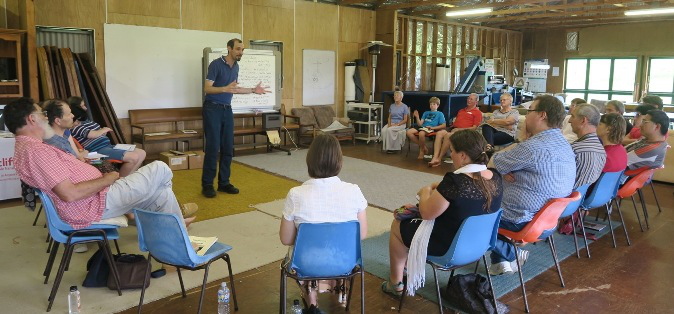
Ready, Set … Thrive!
Dynamics of cross-cultural living exacts forces of pressure on ex-pats that can affect one’s ability to thrive. Equipping mission workers well takes high priority at Wycliffe Australia. Course topics; communication skills, spiritual vitality, adaptation and living in community introduce disciplines that enable workers to be proactively engaged in healthy ministry practices.
World Wide Wycliffe
This workshop introduces the world of Wycliffe, SIL and Wycliffe Global Alliance while exploring the history of Bible translation, new trends in the range of ministries within the scope of Bible translation as well as beginning to look at working in cross-cultural teams and personal resilience.
Explore Language
 Explore Language introduces you to the elements that strengthen cross-cultural missions and gives you the opportunity to assess your ability to communicate in another language and culture.
Over the five day course, you will have hands-on experience in learning a new language, looking at its sounds and structures as well as the people’s culture.
Presenters involved in Bible translation, literacy and Scripture Use will share from their experience and give a glimpse into what it means to engage people with the message of Christ in ways they can truly understand.
 Thanks for your patience...